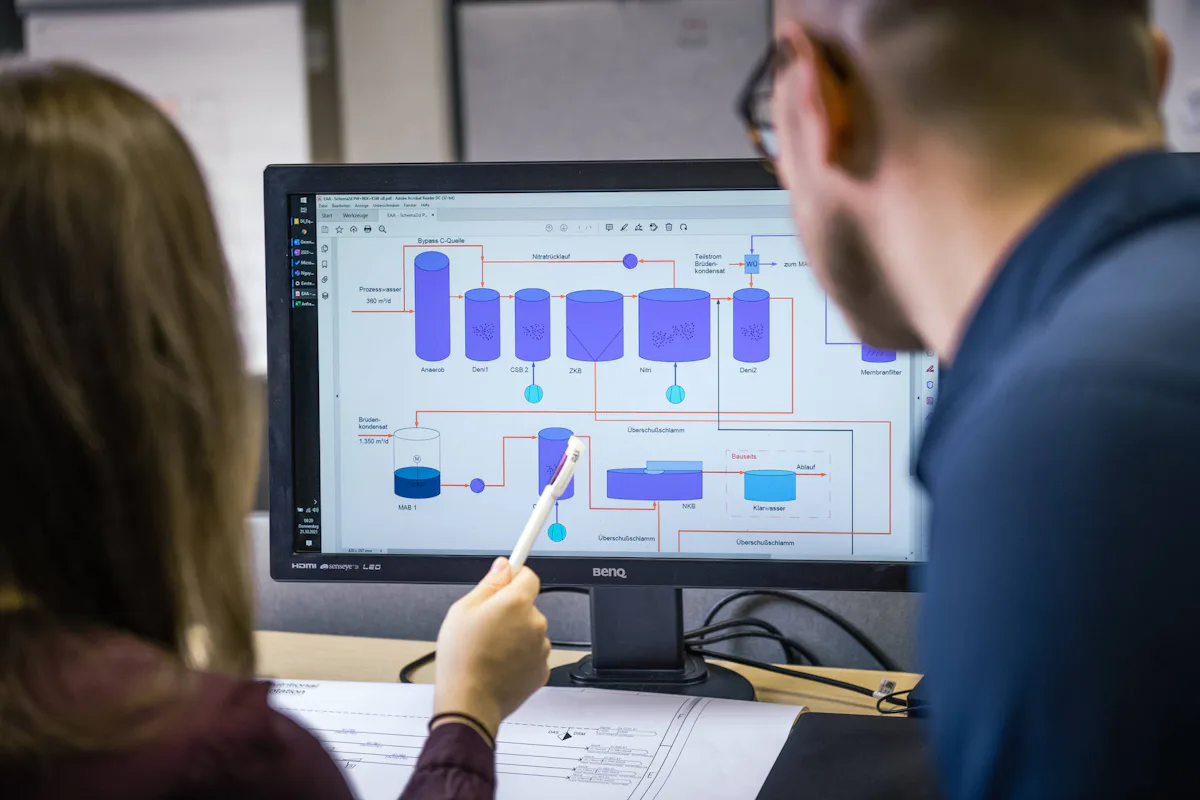
From Wastewater to Resource
The technical article “From Wastewater to Resource. Efficient Water Reuse in the Semiconductor Industry” (gwf Wasser + Abwasser 03/2026) demonstrates how modern water recycling and wastewater treatment concepts help to significantly reduce the enormous water requirements of chip manufacturing and make industrial water cycles more efficient.
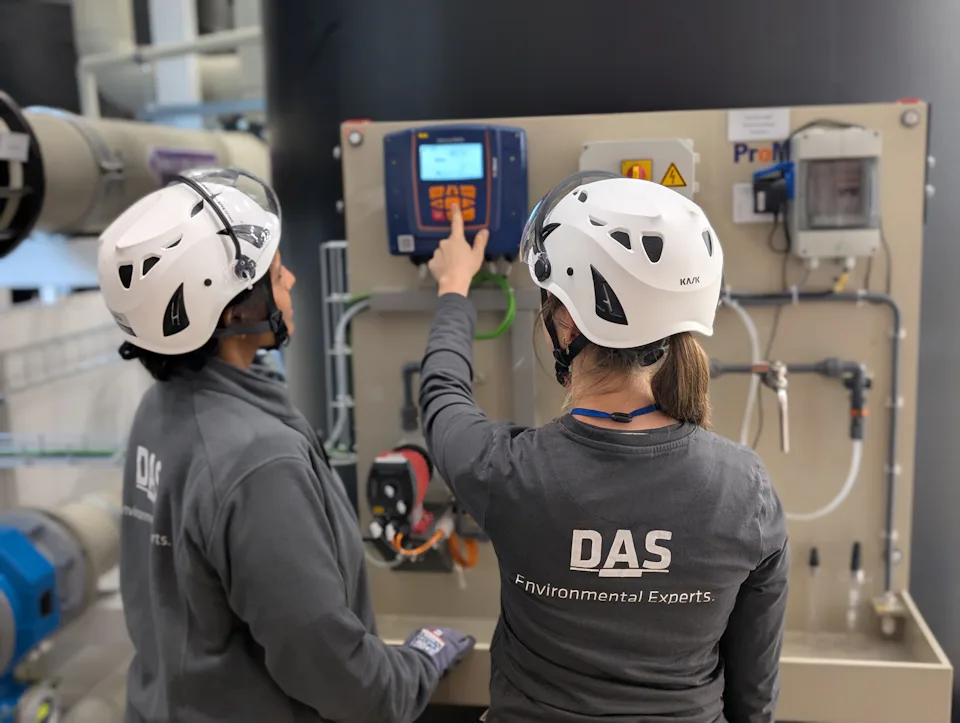
Water as a Critical Resource in the Semiconductor Industry
The semiconductor industry is a key driver of digitalization and an efficient economy. Complex electronic components such as microchips, power semiconductors, sensor chips, and logic chips are found in nearly every modern industrial application.
At the same time, semiconductor manufacturing is one of the most resource-intensive industries worldwide, particularly in terms of water consumption. Forecasts predict that global consumption will double by 2035; for Europe, a fourfold increase is even expected by 2030.
Sustainable water management is thus becoming a strategic competitive factor, particularly in water-scarce regions such as Taiwan, Singapore, and parts of the U.S., the global hubs of chip manufacturing. Studies show that even Germany, despite high water availability, is already experiencing local water shortages today, for example due to droughts and falling groundwater levels. At the same time, regulatory pressure is increasing due to the EU Water Framework Directive, national regulations, and initiatives such as the Green Deal.
The German Advisory Council on Global Change (WBGU) assesses water management not only as an ecological but also as a key geopolitical factor for security of supply and location stability. Companies that use water as a recyclable resource reduce their fresh water demand, increase their resilience, and improve regional acceptance.
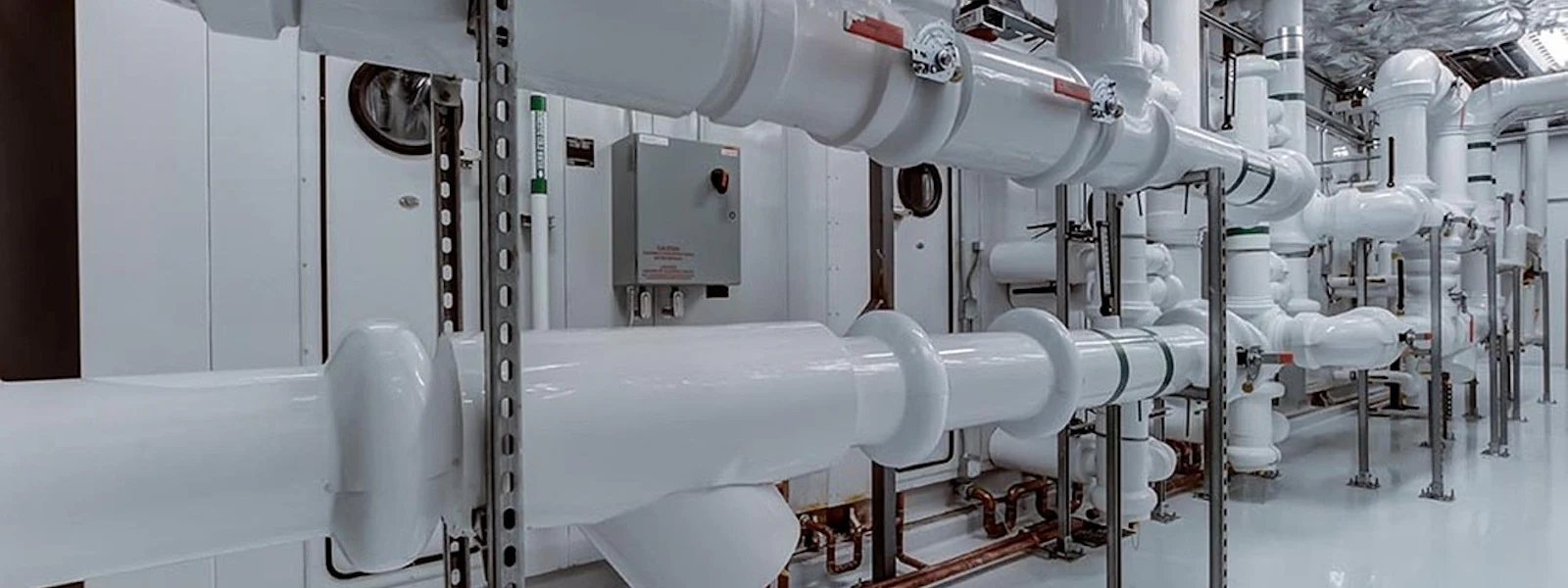
Water Use in Semiconductor Manufacturing
Semiconductor production places the highest demands on water quality. Depending on the application, silicon wafers undergo several hundred to over a thousand process steps in a cleanroom and are cleaned regularly. This process uses ultrapure water (UPW), the production of which requires approximately 1.4 to 1.6 liters of tap water per liter of UPW. The cleaning processes prevent contamination of the structures, which are manufactured at the nanometer scale, by particles and dissolved substances. UPW is also used in etching processes to rinse away excess etchant and remove chemical residues. In the process, the water becomes contaminated with acids, bases, oxidizing agents, solvents, and particles.
Depending on the process, different water qualities are used: UPW for highly sensitive steps such as wafer cleaning, rinses following etching and lithography steps, and deionized water (DI) for processes such as backgrinding (reduction of wafer thickness) and the regeneration of ion exchange resins. Process return water from UPW rinses can be used for utility purposes after appropriate post-treatment, so that UPW often accounts for only a portion (e.g., 40 to 60%) of a fab’s total water consumption.
Typical Process Steps and Their Characteristic Wastewater Streams
Various wastewater streams are generated during the manufacturing process, each resulting directly from the respective process steps. In lithography, wastewater containing resist and developer is the primary source, leading to an increased organic load. Cleaning processes generate streams with high concentrations of acids and alkalis, such as sulfuric acid, hydrogen peroxide, or ammonium hydroxide, supplemented by solvents like IPA or DMSO. In chemical-mechanical polishing (CMP), wastewater rich in particles from slurries containing silicon dioxide (SiO₂), tungsten dioxide (WO₂), or aluminum oxide (Al₂O₃) predominates, along with stabilizers that reduce the sedimentation tendency of the solids. Wet etching processes generate highly acidic wastewater containing fluoride from hydrofluoric acid (HF) or buffered hydrofluoric acid solution (BOE), as well as other mineral acids such as hydrochloric acid (HCl) or nitric acid (HNO3), which often constitute the primary design factor.
Additional wastewater streams are generated during waste gas treatment in the utilities area directly below the cleanroom (subfab). Process gases are converted into aqueous phases in burn-wet systems there and emerge as acids from fluorine, phosphorus, chlorine, or sulfur compounds, as well as solid particles—for example, from silicon and gallium—or as dissolved organic substances. Mechanical processes such as backgrinding also generate particle-laden water containing silicon dioxide, germanium, or tungsten oxides. The ultrapure water system contributes rinse water, concentrates, and regenerates that contain only a few particles but dissolved salts and organic additives such as citric acid. In addition, desalinated water from cooling towers is generated, which primarily contains inorganic salts and corrosion inhibitors such as azoles. Overall, there is a complex, highly heterogeneous range of wastewater that requires separate collection and differentiated treatment of the individual wastewater streams.
Wastewater Treatment Plant
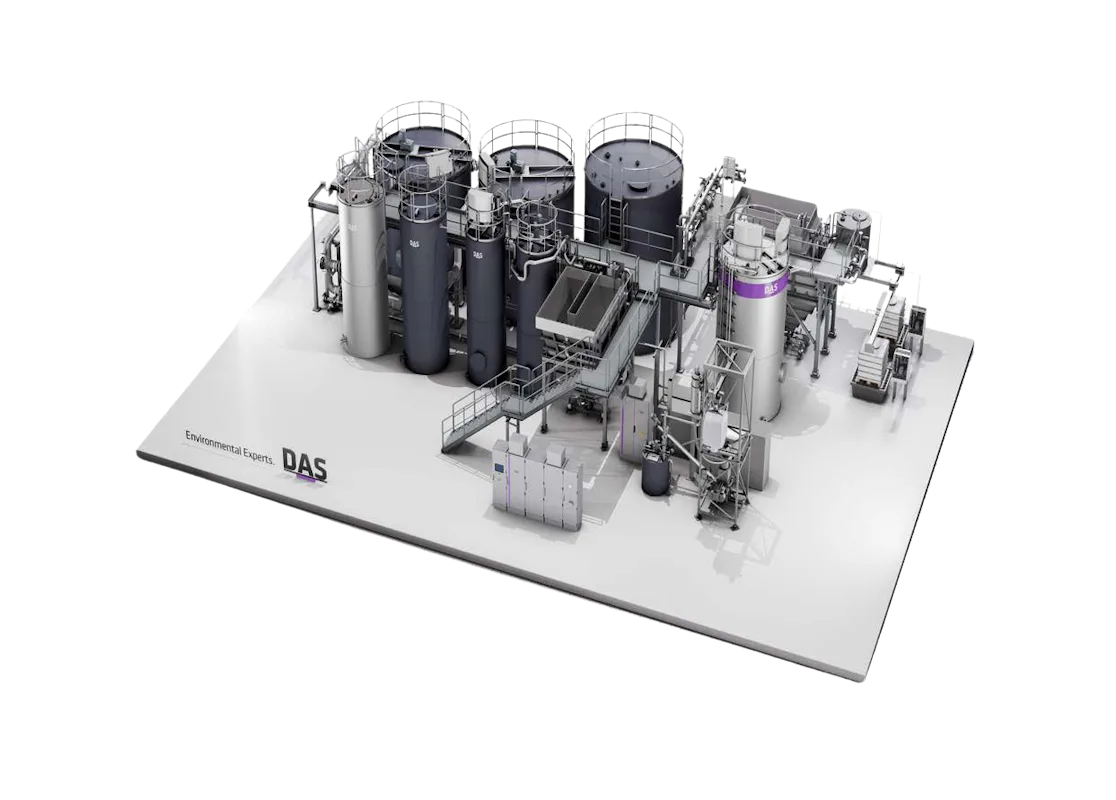
Treatment Modules for Semiconductor-specific Stresses (EOP Treatment)
The treatment of wastewater streams generated in a semiconductor fab can generally be carried out either centrally in a central wastewater treatment plant according to the end-of-pipe (EOP) principle, or decentralized directly at the point of origin as part of point-of-use (POU) concepts. While POU approaches are gaining increasing importance, particularly in connection with targeted water recycling strategies, and are considered a relatively new development, the centralized treatment of separated sub-streams according to the EOP principle represents the technology that is established and practiced in the field. EOP treatment refers to processes for the purification and treatment of wastewater at the end of a production process. The aim of these measures is to treat contaminated water in such a way that it meets legal requirements before being discharged into the environment, released into the local sewer system, or returned to the cycle.
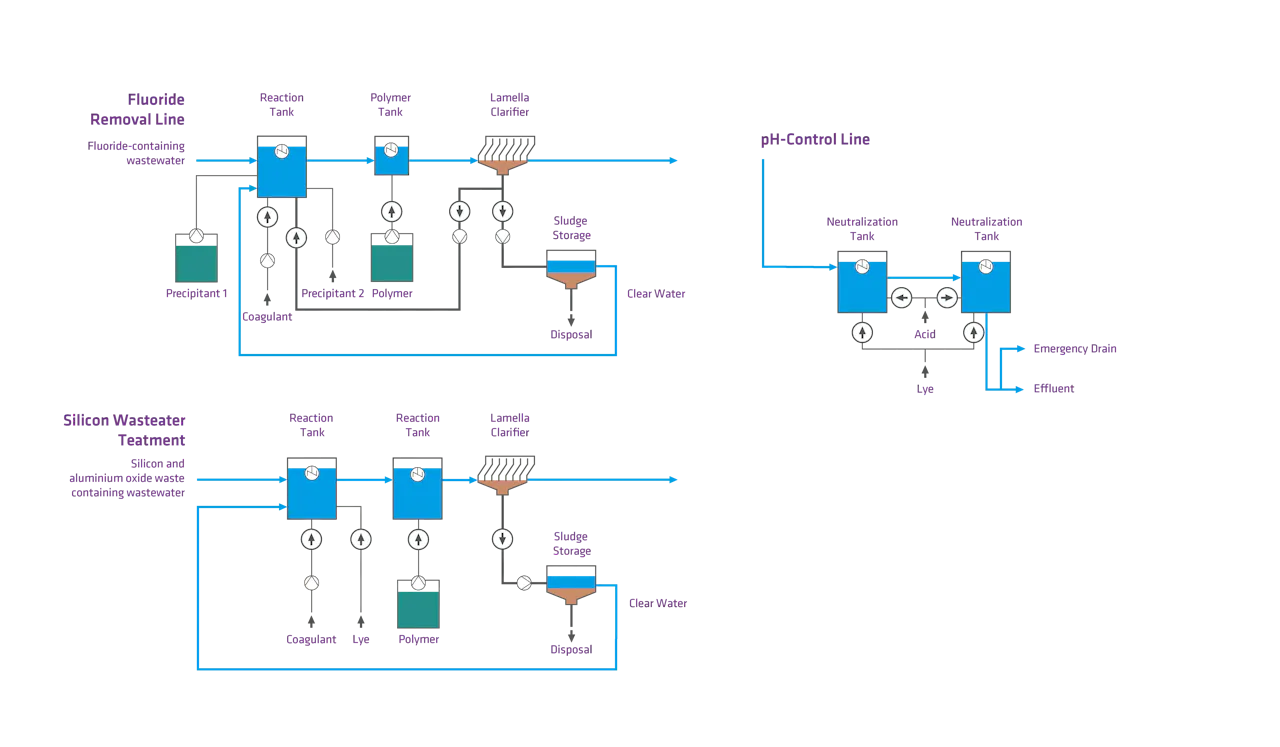
Wastewater can typically be divided into three main groups: fluoride-containing wastewater from etching and cleaning processes, particulate-laden wastewater containing SiO₂ and aluminum particles from cutting and polishing processes, and other acidic and alkaline wastewater from various production steps. These diverse streams place high demands on the removal of total suspended solids (TSS), targeted fluoride separation, and stable pH control. The following section presents an example of the chemical-physical treatment of these wastewater streams.
Fluoride treatment
Wastewater containing fluoride is treated in a separate line. The objective of this stage is the reliable precipitation and removal of dissolved fluoride.
First, calcium is dosed to precipitate the fluoride in the form of sparingly soluble calcium fluoride (CaF₂). The addition of caustic soda shifts the precipitation to the optimal pH range.
This is followed by coagulation, e.g., using ferric chloride (FeCl₃), which destabilizes fine particles and causes them to agglomerate. The subsequent flocculation with polymer leads to the formation of larger, easily settleable flocs.
Solid-liquid separation takes place in a lamella clarifier, which, due to its large effective settling surface area, enables a compact design while maintaining high separation efficiency. The clarified water is fed to the subsequent neutralization stage, while the resulting sludge is collected in a storage tank, thickened, and disposed of off-site.
Silicon treatment
Wastewater from cutting and polishing processes is also routed through a separate treatment line. This wastewater primarily contains finely dispersed SiO₂ and aluminum particles that cannot be settled without chemical assistance.
Treatment is carried out via coagulation, e.g., with FeCl3, which neutralizes the surface charges of the particles and causes them to aggregate into flocs. Additionally, sodium hydroxide (NaOH) is dosed to adjust the pH to the optimal range for flocculation. Subsequent polymer flocculation forms stable flocs that can be efficiently separated in a lamella clarifier. The resulting sludge is temporarily stored in a separate tank, dewatered, and then disposed of off-site.
Neutralization
The treated wastewater from the fluoride and silicon treatment processes is fed together into a multi-stage neutralization system. Additional acidic and alkaline wastewater from production is also integrated into this process.
The pH is adjusted as needed by dosing sodium hydroxide (NaOH) to neutralize acidic wastewater and hydrochloric acid (HCl) to lower excessively high pH values. The multi-stage design enables high control accuracy and compensates for fluctuations in the composition and volume of the influent streams.
To ensure stable plant operation and compliance with discharge conditions, relevant parameters are continuously monitored. The focus is on:
pH value,
concentration of total suspended solids (TSS),
fluoride concentration.
These parameters serve both for process control and for documented compliance with regulatory requirements.
Monitoring and Control of Fluoride Precipitation Processes
The pH value plays a decisive role in fluoride precipitation and in the coagulation of silicon particles. To effectively remove dissolved fluoride, the fluoride concentration is determined in the influent and effluent of the fluoride line. In the effluent of the neutralization process, the final pH value, fluoride concentration, and TSS are also determined. Flow sensors are installed in all inflows and in the neutralization outlet for system balancing.
Flowchart of Chemical and Physical Treatment
Technical Principles of Water Recycling
The goal of water recycling is to reduce fresh water intake, minimize discharges, and close water loops. Reasons for implementing recycling concepts include reducing dependence on external sources in water-scarce regions, achieving cost savings through the reuse of lightly contaminated water, and maintaining control over fresh water quality through on-site treatment. The first key step is to define the target quality: either recirculation into the feed of the ultrapure water (UPW) system or treatment to produce reclaimed water (RCW) for less critical applications. RCW quality is often easier to achieve and is suitable for applications such as exhaust gas abatement, cooling systems, or certain utility processes.
Many rinsing processes generate only minor contamination, so that their wastewater can be directly reused as RCW after appropriate treatment. Typically, treatment begins with particle removal, e.g., via ultrafiltration (UF), possibly following coagulation and sedimentation, followed by reverse osmosis (RO) to reduce dissolved substances. Oxidizing agents contained in the water, such as hydrogen peroxide, are catalytically degraded or reused, for example, in UV-based Advanced Oxidation Processes (AOP).
Most wastewater first undergoes neutralization, while streams contaminated with HF, solids, or ammonium are pretreated separately to specifically address critical components.
The UPW system offers particularly high savings potential, as large volume flows circulate there: measures such as two-pass RO or rinse water reclamation are considered “low-hanging fruit” with comparatively low effort and high impact. Here, too, a distinction is made between centralized EOP concepts and decentralized loops. In EOP systems, a distinction can be made between Minimal Liquid Discharge (MLD) and Zero Liquid Discharge (ZLD), whereby ZLD with recirculation into the UPW feed represents the maximum level of recycling, though this is accompanied by high investment and operating costs. Decentralized approaches treat separate streams directly at the source (POU), such as abatement water or backgrinding wastewater, and enable the recovery of valuable substances at higher purity or concentration.
Integration of Water Recycling Concepts in Semiconductor Factories
Systems designed for the extensive or complete recovery of water streams, particularly Zero Liquid Discharge (ZLD), place high demands on space, energy supply, and utility infrastructure. Such systems require large-scale equipment, evaporation stages, and concentration plants, which generally limits their application to new construction projects (greenfield). Here, the entire fab infrastructure can be designed from the outset to accommodate the additional energy and space requirements. Retrofitting existing plants (brownfield), on the other hand, is usually only feasible with disproportionately high effort due to limited space, existing piping architecture, and a lack of energy or cooling capacity.
End-of-pipe (EOP) reclamation concepts, which are not based on the ZLD principle, offer significantly greater flexibility. Depending on the quality of the upstream pretreatment prior to central neutralization, these approaches can also be retrofitted into existing fabs. Typically, recovery rates of about 40 to 70% are achieved. The material load discharged to the municipal wastewater treatment plant remains unchanged, while the flow rate is significantly reduced. This enables measurable savings in both fresh water and wastewater volumes.
Even more modular are point-of-use or bay solutions—that is, decentralized treatment concepts with a small footprint—which are particularly suitable for brownfield environments, as they can be integrated without major structural modifications. Only clearly defined process lines are affected; while centralized systems are more efficient in terms of space and energy consumption per cubic meter of treated water, they require the corresponding spatial and infrastructural conditions. Decentralized solutions can treat the water more precisely and efficiently, as it is not yet contaminated with heterogeneous pollutants.
In addition to selecting suitable processes, automation, online analytics, and flexible operating modes are crucial for stable and resource-efficient operation. Modern monitoring concepts continuously record quality parameters and enable dynamic adaptation to fluctuations in load and product. This also includes data exchange between process systems in the cleanroom and downstream systems in the subfab, supported by digital platforms and networked control solutions.
Case Study: Integrated Water Recycling in a Factory (POU Concept)
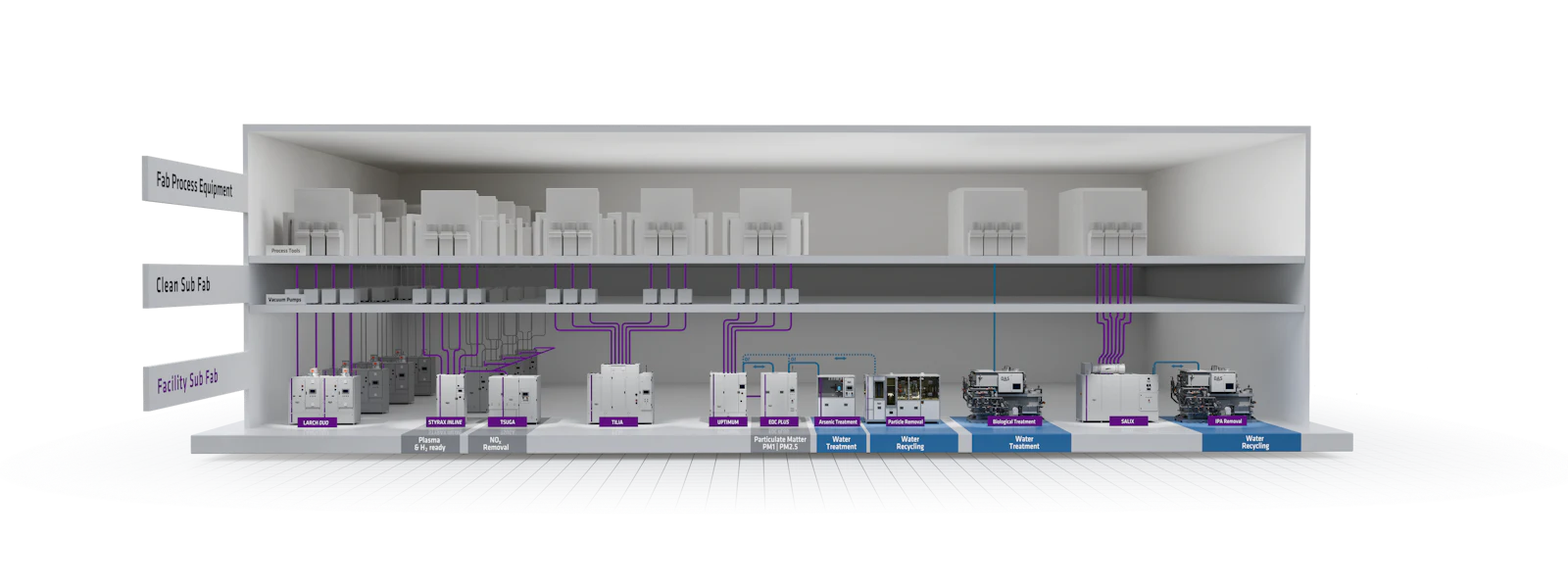
While centralized wastewater treatment plants, as described above, ensure reliable compliance with discharge limits, they are increasingly reaching their economic and environmental limits in the face of rising production volumes, more complex process chemicals, and growing sustainability requirements. In semiconductor factories with high water consumption in particular, the focus is therefore shifting toward an approach that does not treat wastewater exclusively at the end of the process chain, but rather minimizes or pre-treats it specifically at the point of origin.
A key application area for this technology is waste gas treatment systems in the so-called subfab. These systems are used to clean process-related exhaust air streams, in which gaseous pollutants are burned and transferred into washing liquids. The wastewater generated in this process often contains high concentrations of specific substances, such as particles (oxides), fluoride, acids, or bases. The volume of wastewater generated by such an waste gas treatment system is low compared to that of a semiconductor fab. However, the number of waste gas abatements in a semiconductor fab can range into the hundreds—or even thousands—and thus account for 25% of the fab’s total wastewater volume. Point-of-use concepts aim to treat these highly contaminated sub-streams directly at the source and, ideally, return the treated wastewater back to the abatement systems.
This minimizes the fresh water requirements of the waste gas abatements while simultaneously reducing the hydraulic load on the semiconductor fab’s central wastewater treatment system. The composition of the wastewater varies depending on the waste gas treatment system and the upstream process tool. In pure scrubbers, contaminants such as isopropanol, hydrofluoric acid, hydrochloric acid, dissolved salts, and ammonia are primarily found. In burn-wet systems, the wastewater matrix often consists of a mixture of, among other things, dissolved salts containing fluoride, arsenic, phosphorus, boron, and particles. In pure dust abatements (particle separators), on the other hand, the wastewater is particle-laden and may also contain low concentrations of salts.
The simplest method of wastewater treatment involves targeted particle removal while taking other wastewater parameters into account. The treated wastewater can then be returned to the waste gas treatment system—until the dissolved substances in the cycle have accumulated to a certain level. Once the limit value is reached, the recycled water must be replaced to prevent process disruptions. By reusing the treated wastewater up to this limit, water savings of up to 90% are possible. Losses from the water cycle are compensated for with fresh water. This simultaneously dilutes the dissolved substances in the water and increases the water recycling rate.
Summary and Outlook: The Role of Water Recycling in Sustainable Chip Production
The semiconductor industry is increasingly transforming wastewater into a valuable resource through targeted recycling, specialized treatment lines, and hybrid approaches ranging from centralized end-of-pipe to decentralized point-of-use treatment. These strategies directly contribute to global manufacturers’ net-zero water goals by reducing fresh water demand by up to 90%, minimizing discharge volumes, and closing loops—essential in light of the aforementioned projection that water demand will double by 2035.
Future considerations will focus on fully closing the loop, integrating with energy and heat recovery, and recovering raw materials (e.g., IPA or metals). In addition, topics related to digitalization, such as digital twins and AI-supported optimization, are coming into focus. These measures lead to ecological and economic resilience at manufacturing sites. Sustainable water management thus becomes a strategic factor for the competitiveness of the semiconductor industry.
Authors
Caroline Albers, Process Design Engineer Water Treatment
Pascal Osten, Technical Director Water Treatment Global
Karin Raths, Technical Communication
Innovative Plant Design