2nd Industrial Water Day at DAS EE in Dresden
At the 2nd Industrial Water Day in Dresden, organised by DAS Environmental Experts and Endress+Hauser, participants from industry, research and administration discussed current challenges and innovative approaches to industrial wastewater treatment.
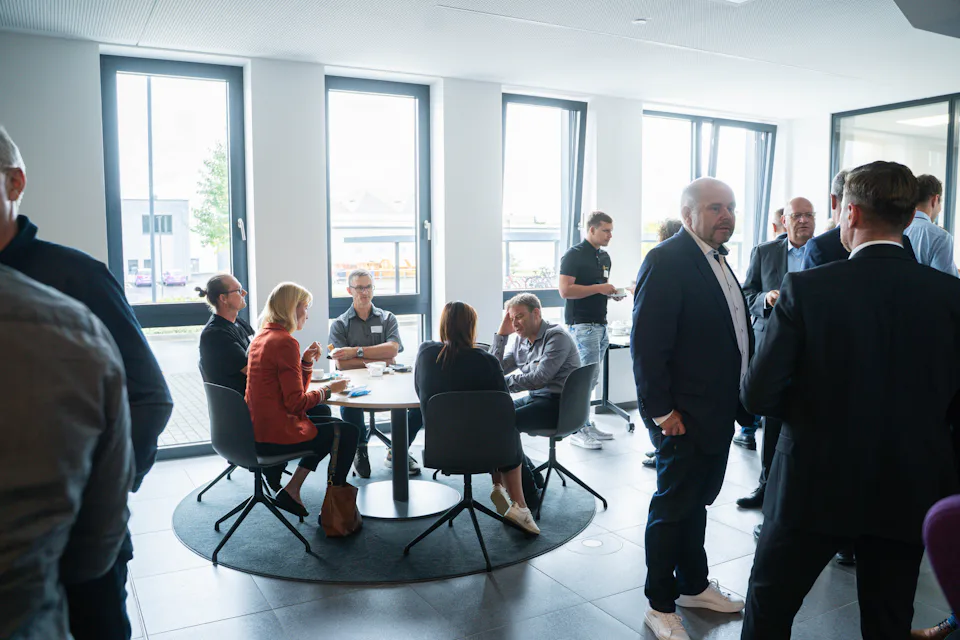
Diverse Industry Leaders Unite at Water Day: Engaging Presentations and Insightful Discussions
The broad range of participants included semiconductor and chemical companies, food and paper manufacturers, specialist wastewater technology providers, engineering firms, measurement technology companies, scientists and administrators.
After a welcome by Mirko Heinze, Chief Operating Officer of the Water Business Unit at DAS EE, and Oliver K. Stöckl, Managing Director of Endress+Hauser (Germany) GmbH+Co. KG, the programme of presentations and round tables began.
Dresden Municipal Drainage: Strategies for Growing Industrial Volumes
Dr. Volker Kühn, Managing Director of Stadtentwässerung Dresden GmbH, presented the planned development of Dresden’s wastewater system. With over 560,000 inhabitants and numerous industrial companies, Dresden is one of the largest wastewater locations in eastern Germany. The strong growth of the semiconductor industry in the north of the city could lead to a doubling of wastewater volumes. Particular challenges include the high salt load, the treatment of micropollutants and the increasing nitrogen pollution. To address these issues, Stadtentwässerung is planning investments of around 630 million euros by 2028.
Process Analytics: New Approaches from Endress+Hauser
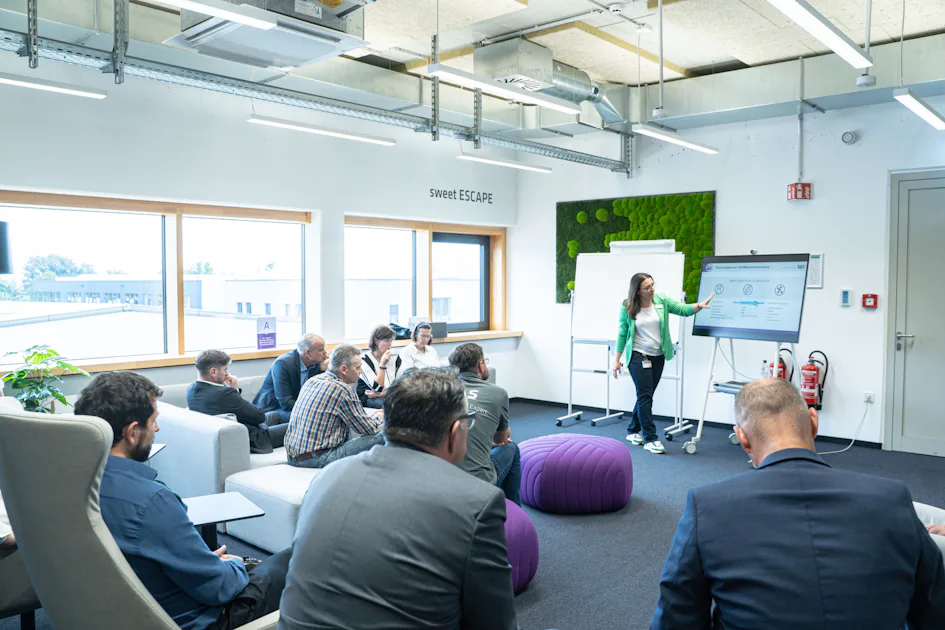
Dr. Andreas Meyer, Business Development Manager at Endress+Hauser, presented approaches to inline process analytics using optical methods. Modern spectroscopy uses light waves, absorption and scattering to precisely detect dissolved and undissolved substances in wastewater. These technologies enable more efficient monitoring and real-time control of processes – a decisive factor for stable and sustainable water cycles.
Biological Processes: Opportunities and Challenges
Dr. Anita Haupt, Director of Process Design Global at DAS EE, highlighted the role of biological processes in the semiconductor industry. Microorganisms use organic pollutants as nutrients – the basis for sustainable and cost-effective purification. When environmental conditions such as temperature and pH are right, the system can run almost autonomously. Limitations arise with substances like ammonium sulphate, the need for qualified plant operators and the significant space requirements. The lively discussion also covered automation, regulatory requirements and water reuse.
Between Chip Production and Sustainability: Recycling in the Semiconductor Industry
Pascal Osten, Technical Director Water Treatment Global at DAS EE, emphasised the growing importance of water recycling. Modern fabs require up to 15,000 m³ of water per day, which is used used for processes suche as etching, cleaning and chemical-mechanial polishing (CMP). Wastewater therefore contains a complex mix of acids, fluorides, dissolved salts and solids. Increasingly, the industry is investing in recycling and treatment technologies, driven by water scarcity, limited discharge capacities and customer sustainability requirements. Recycling is both ecological and economical: it reduces dependence on public water supplies, lowers operating costs and allows production to expand without increasing water consumption.
Wastewater management in the Food Industry
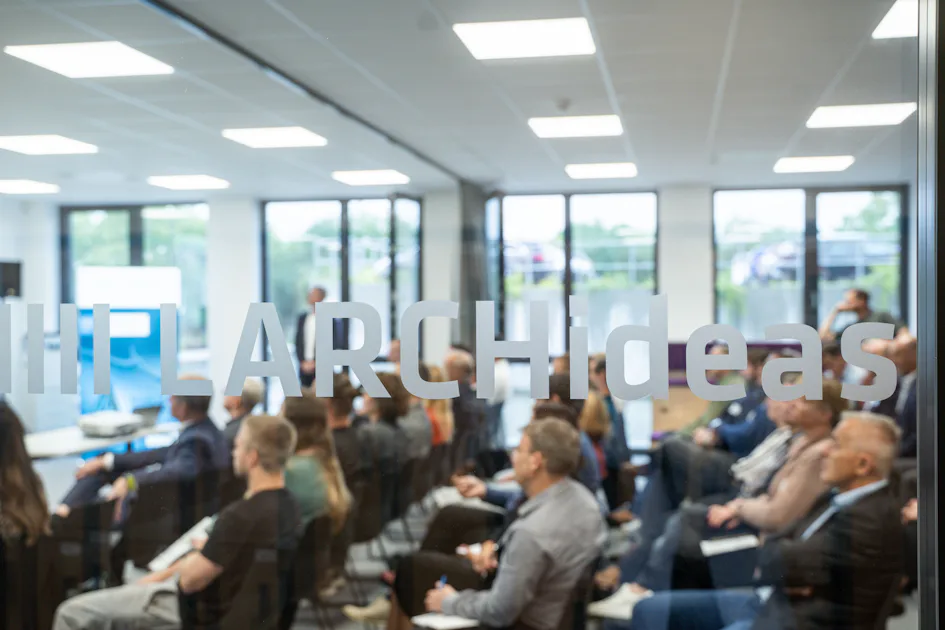
Dr. Christiane Münch, Head of Environmental Technology at Sachsenmilch Leppersdorf GmbH, demonstrated how innovative water management is applied in the food industry. The dairy processes up to 6.5 million litres of milk and whey per day, requiring around 15 million litres of water. To manage this sustainably, the company relies on recycling loops. A highlight is the treatment of production wastewater into process water of drinking-water quality – up to 4,000 m³ per day with a yield of 96%, supported by the German Federal Environment Ministry’s Environmental Innovation Programme.
Conclusion: Dresden as a Model Region
The Industrial Water Day demonstrated how industrial growth, sustainable wastewater treatment and innovative measurement technology must work hand in hand to meet future challenges. Dresden is increasingly becoming a model region for industrial water management, supported by strong collaboration between the city, industry and technology providers.
DAS EE to Lead in Sustainable Innovation at Global Forum 2026 and Upcoming Industrial Water Day
Global Forum 2026: Driving Sustainable Innovation Together (14–16 April 2026, Basel)
Hosted by Endress+Hauser, this international forum will focus on sustainable solutions for industry, the environment and society. DAS EE specialists will contribute their expertise in industrial water and waste gas treatment
3rd Industrial Water Day 2026 (in planning)
Following the successful events in 2024 and 2025, the next edition is already being prepared. It will once again bring together experts from industry, academia, administration and technology to discuss the latest trends in industrial water management.
