Mechanical Wastewater Treatment for high Operational Reliability
Wastewater often contains water-insoluble substances or colloids. Through various sedimentation, filtration and separation processes, solid substances are removed during mechanical wastewater treatment.
Mechanical Processes as the First Cleaning Step
In many industrial plants, mechanical wastewater treatment is the crucial first step in the cleaning process. The reliable removal of coarse and fine particles not only ensures the operational safety of the entire plant, but also significantly reduces the maintenance effort in the downstream biological or chemical-physical stages. This reduces operating costs in the long term and ensures trouble-free and efficient plant operation.
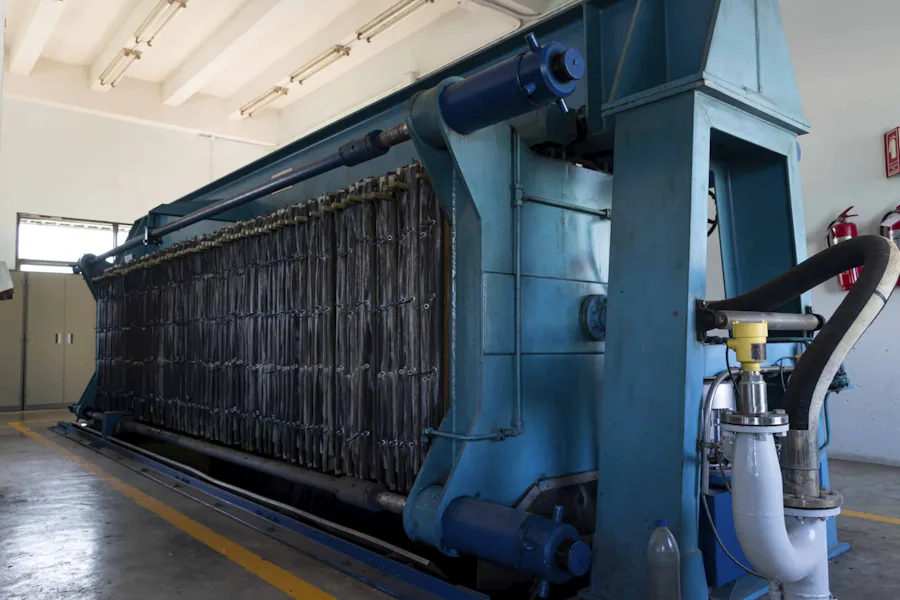
Mechanical processes are also used in sludge dewatering, for example through the use of filter presses. They enable a significant reduction in the volume of sludge and thus contribute to lower disposal and transportation costs.
Overall, mechanical pre-treatment can remove around 20-30% of the total pollutants from untreated wastewater. The remaining dissolved or finely dispersed substances can then be effectively treated further in biological or chemical-physical purification processes. Mechanical cleaning is therefore an indispensable basis for efficient and sustainable industrial wastewater treatment.
Coarse-and-Fine Materials Separation Utilizing Screens and Strainer
Screens and filters play a crucial role in removing solid contaminants from wastewater. These mechanical processes effectively separate pollutants such as diapers, hair, wet wipes and other solids from the wastewater stream. In the treatment of industrial wastewater, filters are used to separate textile fibers, paper labels, plastic residues, potato peelings and other production waste.
Depending on the application, coarse or fine screens are used to clean the wastewater. These screens have different sized parallel bars, grain sizes, sieves, perforations and mesh sizes. Coarse screens (> 20 mm) can separate solid substances up to the size of human excrement, while micro screens (> 0.05 mm) can filter tiny particles such as sand and sludge.
The maintenance of hygienic wastewater treatment systems is of crucial importance. Wet wipes and nonwovens contain extremely tear-resistant textile fibers that can cause clogging and damage to pumps and mixers. At DAS Environmental Experts, we work closely with our customers to select the right drum screens and self-cleaning screens to prevent damage to treatment equipment and ultimately reduce maintenance costs.
Mechanical Separation of Solid Substances through Filtration
Filtration is another mechanical process that is used to separate solid substances from liquids. Paper, textiles, metal, sand filters, fabric filters and drum screens are common filter media. These filter systems effectively remove organic and inorganic suspended solids, sand and dust from wastewater. Filter systems are particularly important for sludge dewatering in filter presses. Membrane filtration is a special mechanical separation process in which a membrane serves as the filter medium. This process is used to separate very fine particles.
Wastewater Treatment through Membrane Technology
Microfiltration
Used for the separation of particles, bacteria, yeasts, for cold sterilization and for the separation of oil-water emulsions.
Nanofiltration
Retains viruses, heavy metal ions, large molecules and fine particles. Used for water softening and drinking water treatment.
Ultrafiltration
An important process for treating wastewater and drinking water. It separates particles, microorganisms, proteins and turbidity. Used in the membrane activation reactor (MBR) and for purifying swimming pool water.
Reverse Osmosis
Concentrates landfill wastewater, purifies drinking water in rural areas, desalinates seawater and decalcifies boiler water in power plants. In this process, dissolved substances in liquids are concentrated by pressurization via a semi-permeable membrane, which reverses the osmosis process. It is also used to produce ultra-pure water.
Questions about mechanical wastewater treatment?
We support you with filtration, sedimentation and other basic wastewater technology processes. Contact us for a consultation.
Deputy Chief Operating Officer Water Treatment