3rd Industrial Water Day Dresden: Water Management at the Intersection of Growth and Sustainability
Water availability, increasing environmental requirements, and growing production capacities are changing how industry manages water. At the Dresden Industrial Water Day 2026, experts from industry, research, and plant engineering discussed how wastewater can be used to create new water cycles and resources—and why the semiconductor industry is a particular focus in this context.

Water Is Becoming a Strategic Factor in Production
For many industries, water has long been more than just an operational resource. Its reliable availability is increasingly a determining factor in where and how production capacities can be established and operated. At the same time, requirements regarding wastewater quality, resource efficiency, and reuse are on the rise.
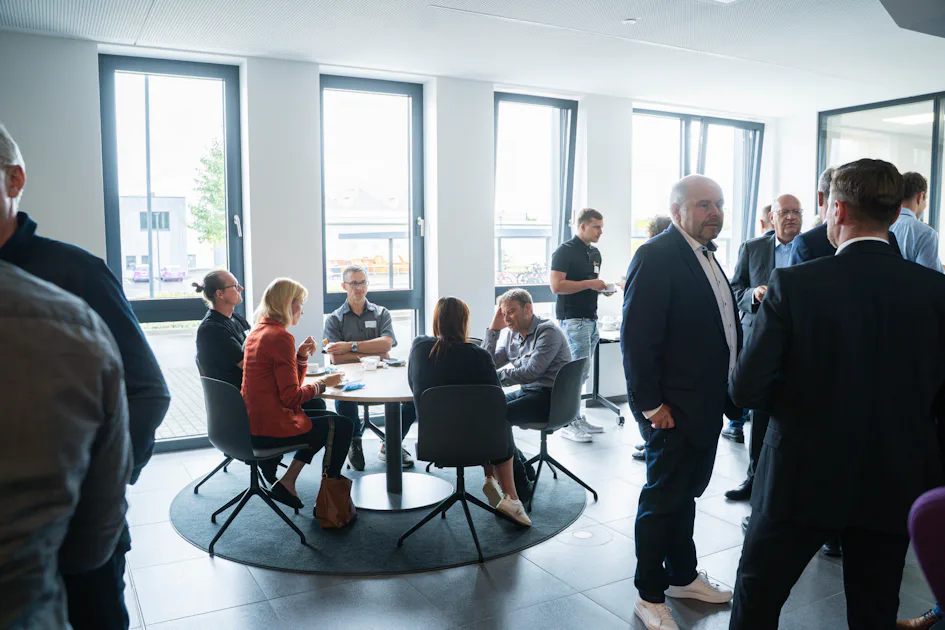
This development was the focus of the 3rd Dresden Industrial Water Day, which DAS Environmental Experts organized in collaboration with Endress+Hauser on September 8, 2026. The event, held on the DAS campus, brought together experts from various industries as well as research and development. The presentations, case studies, and five roundtable discussions covered a wide range of topics, from industrial wastewater treatment and water recycling to PFAS and the fourth treatment stage, as well as heat recovery and resource recovery.
Although the challenges vary considerably depending on the industry and location, the fundamental questions are similar:
How can a reliable water supply be ensured?
How can treated water be reused?
And how can this be achieved in a cost-effective and energy-efficient manner, while navigating a changing regulatory environment?
Growth Requires Water: The Semiconductor Industry as an Example
This tension is particularly evident in the semiconductor industry. As European manufacturing capacity expands, so does the need for a high-performance water infrastructure. Dresden is a prime example of this.
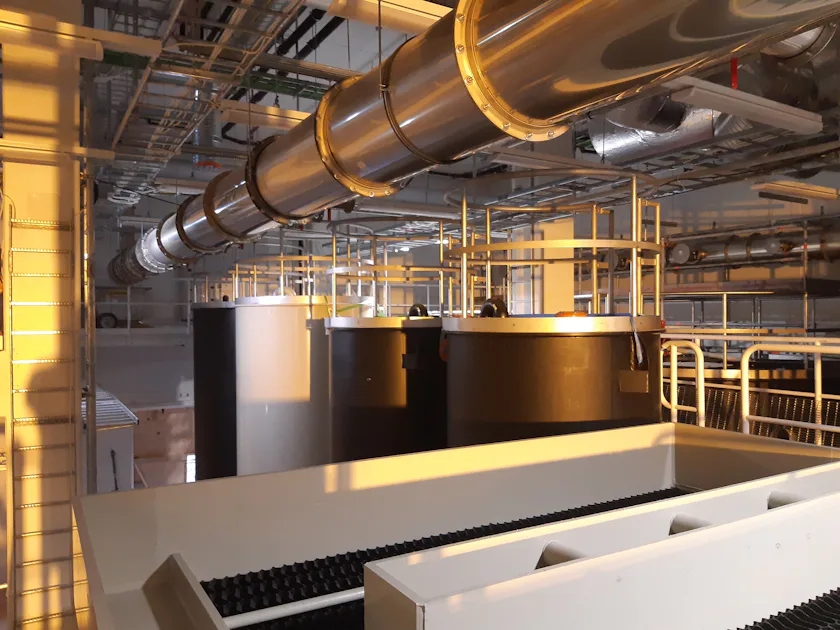
Semiconductor manufacturing requires large quantities of very high-quality water. Raw water is pretreated and processed into ultrapure water (UPW). After use, various wastewater streams are generated. The key question is therefore no longer just how this wastewater is treated, but which sub-streams can be treated and reused—and what potential they offer for resource recovery.
Internationally, this trend has progressed to varying degrees. Water scarcity has already led to high reuse rates and regulatory requirements, particularly in parts of Asia. In Europe, the pressure to act is also growing. For new factories, this presents an opportunity to incorporate water recycling into the planning phase. In existing facilities, however, retrofits are significantly more challenging because changes to the water infrastructure can directly impact production reliability and costs.
Added to this is a trade-off: Higher recycling rates are technically feasible but require energy. Processes such as reverse osmosis or approaches ranging up to Zero Liquid Discharge (ZLD) can significantly reduce fresh water demand but increase energy consumption and costs. Sustainable water management must therefore consider water and energy efficiency together.
“We need to view wastewater more as a resource. If we can successfully reuse water while simultaneously recovering valuable components, wastewater treatment will become a key component in achieving greater resource efficiency in production.”
From Wastewater to a Circular System
The technologies required for this are, in principle, already available. Ultrafiltration, reverse osmosis, ion exchange and electrodeionisation make it possible to reuse treated water streams for cooling, rinsing or other production processes and, depending on the application, to reintegrate them into the ultrapure water treatment process.
It is crucial, however, not to regard wastewater as a homogeneous stream. Complex industrial processes, in particular, generate wastewater with very different levels of contamination. In semiconductor manufacturing, for example, fluorides, nitrogen and silicon compounds, organic substances or high salt loads may be present.
If suitable streams are collected separately at source, they can be treated in a more targeted manner. This reduces the workload for downstream treatment stages and can, at the same time, increase the opportunities for recycling or resource recovery.
“Water recycling is not about achieving the highest possible recycling rate at any cost. What matters is what water quality is actually required for the process in question and where treated water can be usefully reused.”
Several practical examples presented at the Industrial Water Day demonstrated just how varied such concepts can be: from biological and physico-chemical treatment stages, through compact membrane systems utilising ultrafiltration and reverse osmosis, to the concentration of valuable substances for their recovery. Research initiatives involving ceramic membranes, membrane extraction, and electrochemical and oxidative processes also highlighted how the role of wastewater treatment is expanding.
The traditional task of removing pollutants before discharge is thus increasingly evolving into a more comprehensive form of resource management: water is reused, constituents are recovered, and, in the future, the energy contained in wastewater may also be utilised to a greater extent.
New challenges call for tailored solutions
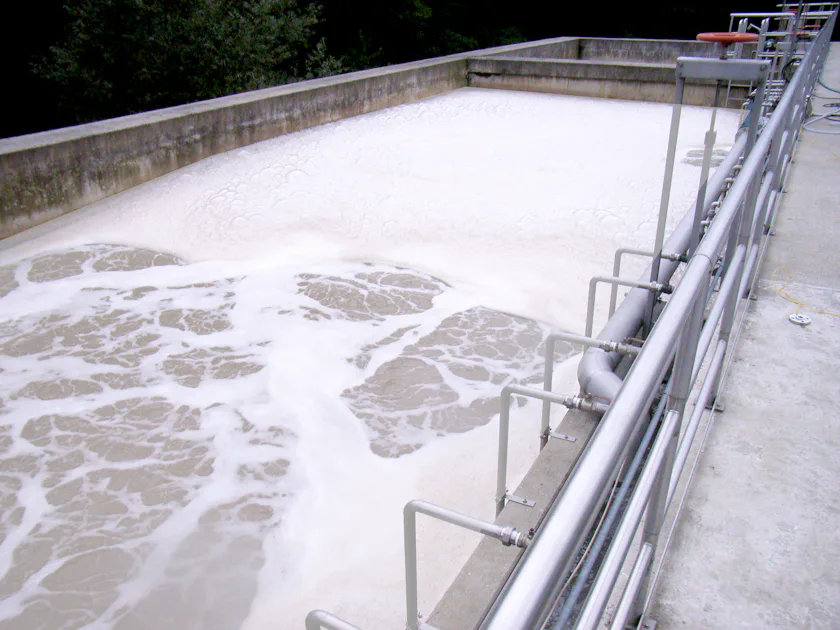
At the same time, the effluent streams to be treated are becoming more complex. The so-called ‘forever chemicals’, PFAS, are a prime example of substances that are difficult to remove using conventional methods and which place new demands on analytical techniques, treatment processes and plant design. The debate surrounding a fourth treatment stage is therefore increasingly relevant to industrial wastewater treatment plants.
Activated carbon, ozonation, membrane processes and advanced oxidation processes offer different approaches to the removal of micropollutants. However, the suitability of a particular technology depends heavily on the composition, concentration and other properties of the wastewater in question. Pilot studies are therefore becoming increasingly important, particularly in industrial applications involving highly variable effluent streams.
“There is rarely a single standard solution for complex industrial effluent. This makes it all the more important for operators to engage in dialogue, so that they can share practical experience and work together to develop viable solutions.”
A look at existing industrial plants also demonstrated that there is rarely a one-size-fits-all solution. At the Schwarze Pumpe Industrial Park, for example, calcareous effluent places particular demands on plant components, measurement technology and operational management. This example highlights how important it is to take specific boundary conditions into account right from the plant design stage and to continuously incorporate lessons learnt from day-to-day operations.
The same applies to the re-engineering of existing sewage treatment works. If wastewater volumes, compositions or regulatory requirements change, some plants may need to be fundamentally adapted – ideally without disrupting ongoing operations. Retrofittability and redundancy therefore become key components of a long-term water strategy.
Water management is becoming a shared responsibility
The 3rd Dresden Industrial Water Day demonstrated one thing above all: industrial water management is evolving from purely wastewater treatment towards integrated water management.
Water recycling can reduce dependence on local water resources. The separate treatment of suitable sub-streams opens up additional opportunities for reuse and resource recovery. New technologies are broadening the range of substances that can be treated. At the same time, energy requirements, cost-effectiveness, production reliability and regulatory requirements must be considered together from the outset.
This requires more than just technology. Early planning, reliable data, pilot schemes and dialogue between operators, researchers, authorities, planners and technology providers are crucial.
“New, practical solutions emerge where research and industrial application work closely together.”
The Dresden Industrial Water Day provides a platform precisely for this purpose. The discussions during the presentations and round-table sessions have shown just how valuable diverse industrial experiences are for the development of new solutions. Many challenges in water management cannot be solved in isolation – which makes the transfer of knowledge and discussion of technologies, practical experience and even solutions that do not work straight away all the more important.
We would like to thank all the speakers, participants and partners who enriched the 3rd Dresden Industrial Water Day with their experiences, questions and perspectives. We look forward to continuing this exchange at the 4th Dresden Industrial Water Day in 2027.
