The Next Level of Efficiency in Chip Manufacturing Is Taking Shape Below the Cleanroom
With Subfab NetZero, DAS Environmental Experts introduces a holistic approach to reducing emissions and operating costs. The new ALCEA waste gas abatement system for NOx treatment expands the company’s portfolio. The first installations are already in place at semiconductor manufacturers in Taiwan.
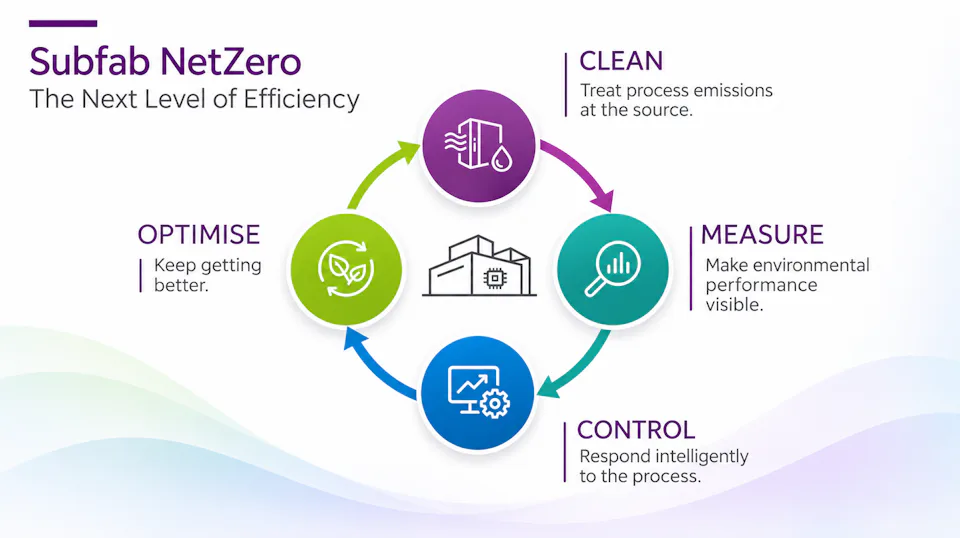
The semiconductor industry is investing billions in new production capacity. At the same time, pressure is mounting to reduce emissions and resource consumption in chip manufacturing while keeping operating costs under control. One key lever is the technical infrastructure below the cleanroom, known as the subfab. At SEMICON Europa, DAS Environmental Experts is unveiling Subfab NetZero, a concept developed specifically to link waste gas abatement, emissions measurement, digital connectivity, and intelligent equipment control. With the new ALCEA waste gas abatement system for treating nitrogen oxides, the company is also expanding its portfolio for emissions reduction. First semiconductor manufacturers are already beginning to explore potential applications of the integrated approach.
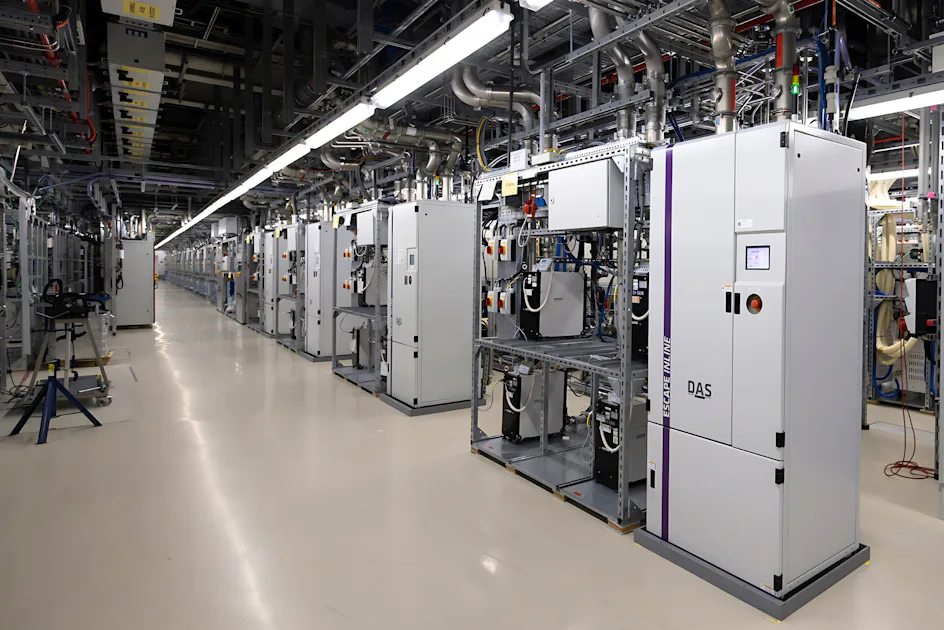
The Hidden Infrastructure of Semiconductor Manufacturing
The subfab is an indispensable part of modern semiconductor fabs. It houses vacuum pumps, process waste gas abatement systems, and other technical equipment that keep highly complex manufacturing processes running. Its impact on a fab’s energy consumption, on the use of gases, water, and chemicals, and on emissions output is immense. Thanks to continuous technological innovation from companies such as DAS Environmental Experts, the efficiency and performance of these systems have increased significantly in recent years. However, the company’s experts see the greatest potential for optimization in a holistic view of semiconductor production, in which manufacturing processes and subfab treatment stages are optimally aligned with one another.
Why the Subfab Is Now Coming Into Sharper Focus
Three developments are driving this shift. First, rising costs for energy, water, and consumables are increasing the economic pressure on semiconductor manufacturers. AI applications, data centers, and high-performance computing in particular are pushing demand for powerful chips to new heights, making efficiency gains in production more important than ever. Second, customers, investors, and regulators increasingly expect environmental impacts to be transparently tracked and reduced. Third, companies need reliable data on emissions, consumption, and savings potential to support investment decisions and decarbonization measures. At the same time, modern sensors, environmental monitoring equipment, and digital connectivity now make it possible for the first time to view manufacturing processes and subfab systems end to end. As a result, previously isolated equipment areas can be aligned in a targeted way, unlocking additional efficiency potential.
“The semiconductor industry has made enormous progress in treating waste gases. The next opportunity lies in gaining a better understanding of the environmental performance of the entire subfab and managing its operation more intelligently. If we continuously capture emissions and operating states and run the equipment accordingly, we can improve environmental performance and resource efficiency in tandem. That is precisely the approach we are pursuing with Subfab NetZero."

From Individual Abatement Systems to an Integrated Approach
With Subfab NetZero, DAS Environmental Experts is developing a holistic approach that combines existing abatement technologies with new capabilities in emissions measurement, connectivity, and intelligent operational optimization. It is built on a closed control loop of four functions: Abate, Measure, Validate, Optimize.
The concept calls for relevant emissions and operating states to be captured as continuously as possible. This enables demand-based equipment control, more efficient use of resources, and verification of the resulting improvements using measurement data. The goal is to improve the environmental performance not just of individual systems, but of the entire subfab, with all its components working together.
DAS Environmental Experts draws on more than three decades of experience in waste gas treatment as well as ongoing development work in environmental validation, digital interfaces, and AI-assisted data analysis. Subfab NetZero outlines a long-term technological transformation path that brings together existing solutions and new developments.
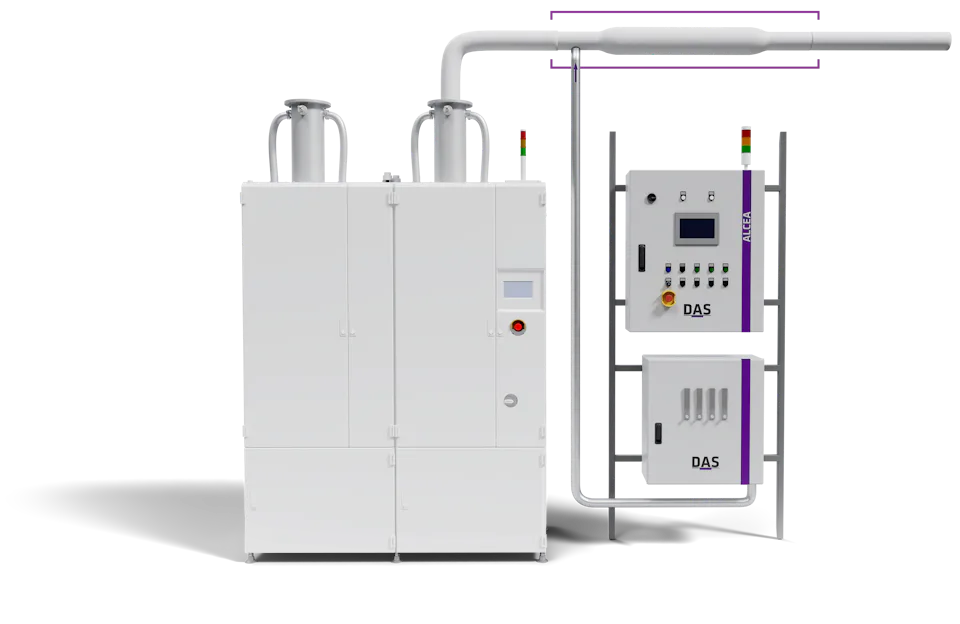
New ALCEA NOx Abatement System Expands the Portfolio
The new ALCEA waste gas abatement system illustrates how DAS Environmental Experts is systematically expanding its technology portfolio to support this approach. SEMICON Europa marks the system’s European trade show debut. ALCEA provides secondary treatment of nitrogen oxides (NOx) and can be integrated directly into existing exhaust ducts downstream of NOx-generating waste gas treatment units. As a result, the system requires no additional floor space in the subfab and is also suitable for retrofitting existing installations.
Under specified operating conditions, ALCEA can reduce NOx emissions by up to 95 percent. The system complements the existing abatement technologies from DAS Environmental Experts as a further building block for emissions reduction.
Lower Resource Consumption Cuts Operating Costs
Semiconductor Fabs Show Early Interest in Subfab NetZero
DAS Environmental Experts is already in active discussions with a first group of semiconductor fabs about potential applications of Subfab NetZero. According to the company, the talks to date indicate strong interest in more closely linking emissions reduction, resource efficiency, and intelligent equipment control.
Starting in 2027, DAS Environmental Experts plans to present the concept in stages in Asia and North America as well, working with fab operators to determine which technological and economic improvements are achievable at their respective sites. The needs of both existing manufacturing facilities and new chip fabs will be taken into account.
The path to a lower-emission subfab will vary depending on location, manufacturing technology, and existing infrastructure. DAS Environmental Experts therefore sees Subfab NetZero not as a single technical measure but as a long-term transformation approach. The aim is to support semiconductor manufacturers in gradually reducing emissions and resource consumption, optimizing operating costs, and documenting progress toward their environmental targets in a verifiable way.
